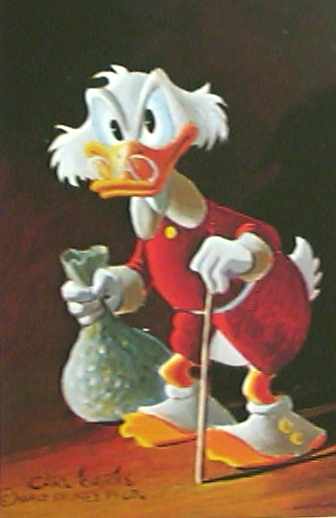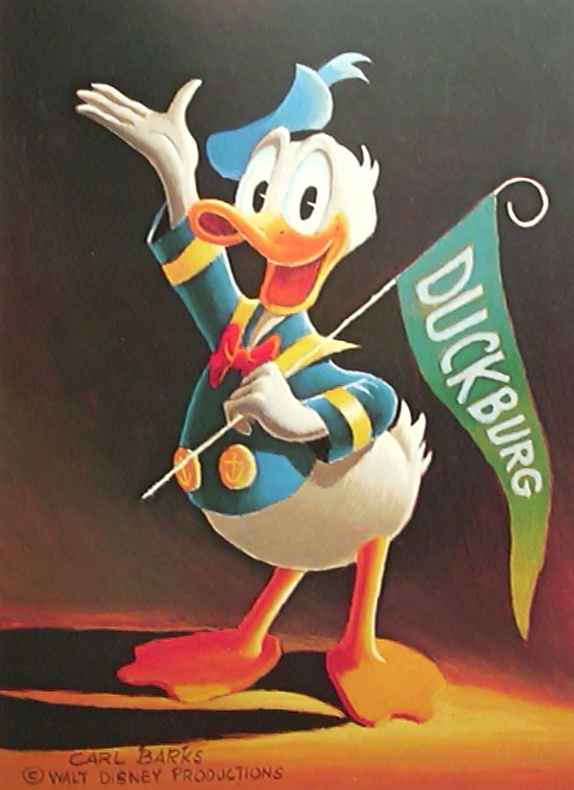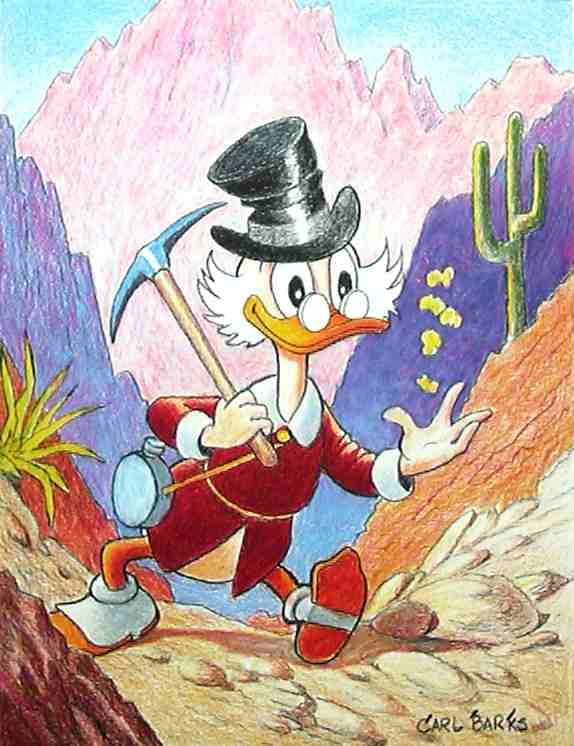
Carl Barks had no say at all in the colouring of his stories in the comic books. In the beginning, he gave very thorough directions about the colouring he wanted in the panels but it was the publisher Western which made the final decisions. So he resigned himself to the fact that he would not get what he asked for. If I asked for a yellow desert, you could be sure it turned out red, he once resignated. This also means that Barks is not to blame for the numerous instances in which the nephews' caps changed colours in the comic books - this was all done by disinterested people at the publisher's and must have been painful for Barks.
After he retired Barks made up for
the many colourless years by using breathtaking colours in his
paintings. Although he had no control in what was used in the
comics at Western's, he was always very fond of bright and strong
colours. He actually felt that the special colouring in the
Disney cartoons greatly contributed to their success, and he
tried very hard to incorporate the same type of colouring into
his paintings. But, he is known to have said that he was never
entirely satisfied with his results.
From
the paintings Barks did in his golden years it is even possible
to deduce which colours he would have preferred when it came to
his beloved comic book characters.
| THE ANIMATED SHORTS | |
|
|
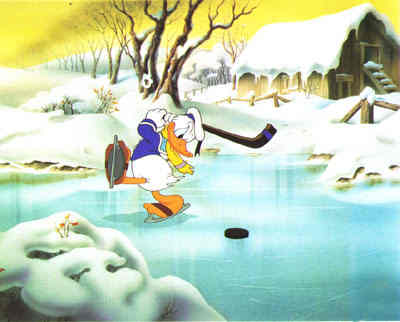
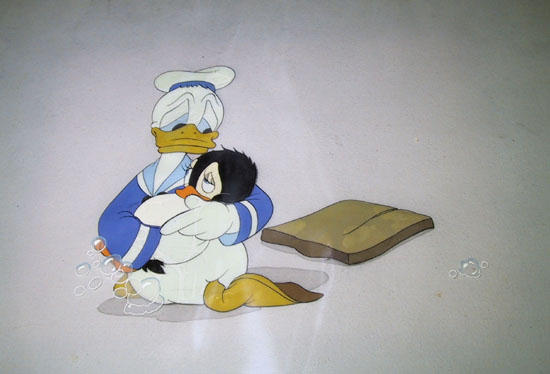
| Barks worked on several animated cartoons
when he was hired by the Disney Studios. In some of them
he even served as Story Director meaning that he would
have his say in the production and end result of the
films. However, this responsibility would probably not
have included the colours of Donald Duck as they would
have been established before. Thus we shall never know if Barks liked the colours of Donald's blue and white sailor's jacket and white cap, but it seems that he much later recalled his pale blue square back collar. |
|
| THE PAINTINGS | |||
|
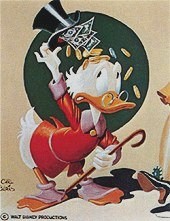 Oh, Oh! (1975) |
|
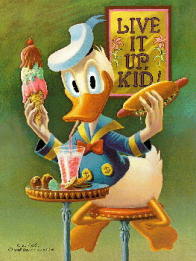 Live it up, Kid! (1976) |
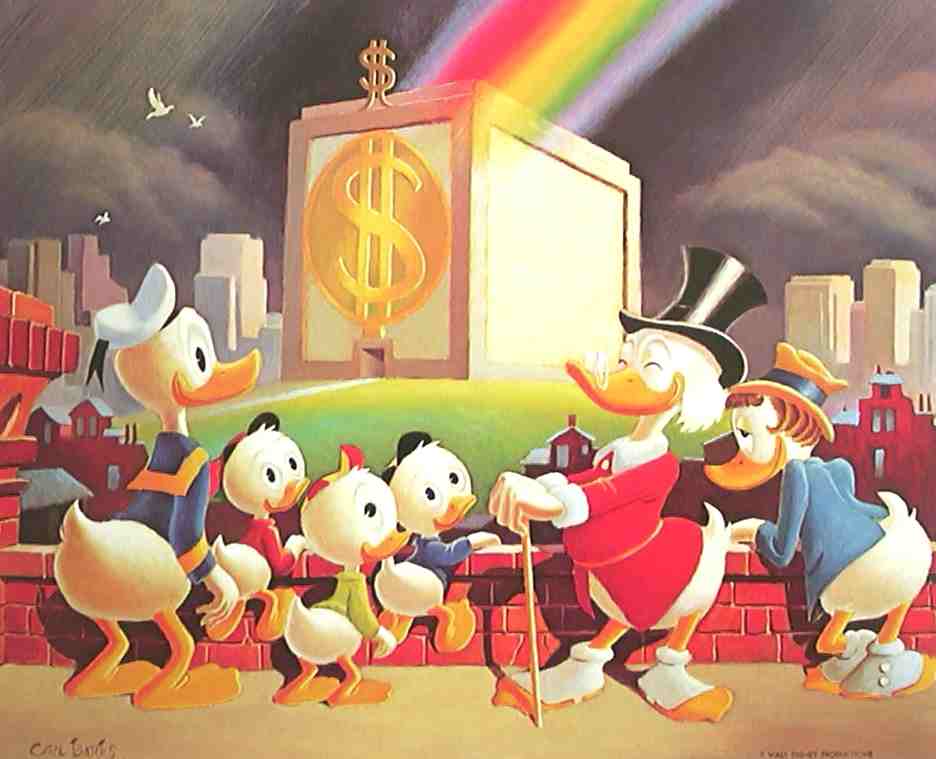 The Wadfather (1972) |
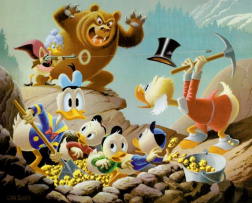 Trespassers Will Be Ventilated (1987) |
||
Barks' paintings
are built up from many layers of base colours before the
final layer is added. This protracted technique gives the
paintings their special bright and rich glow which can
never be reproduced on paper let alone on a computer
screen. Barks preferred to paint on masonite because of
its smooth surface and the bright way the colours turned
out. |
|||
| THE CRAYONS | |||||
|
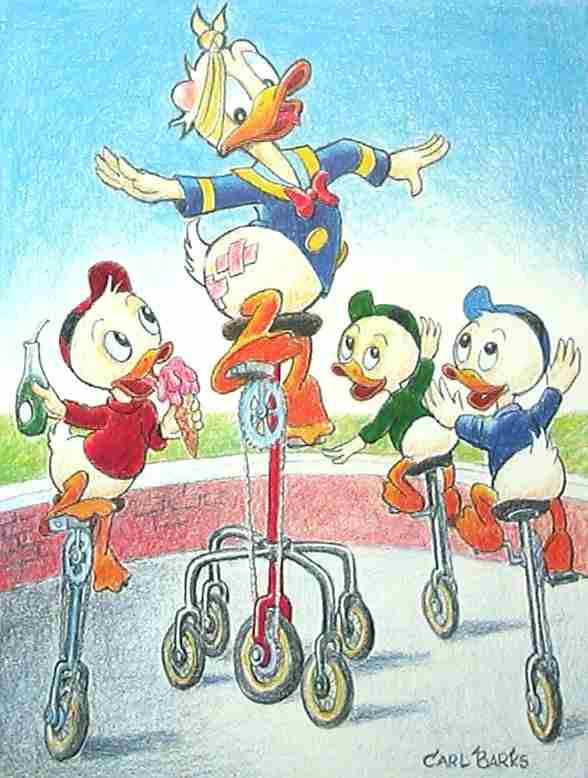 Time for a Tantrum |
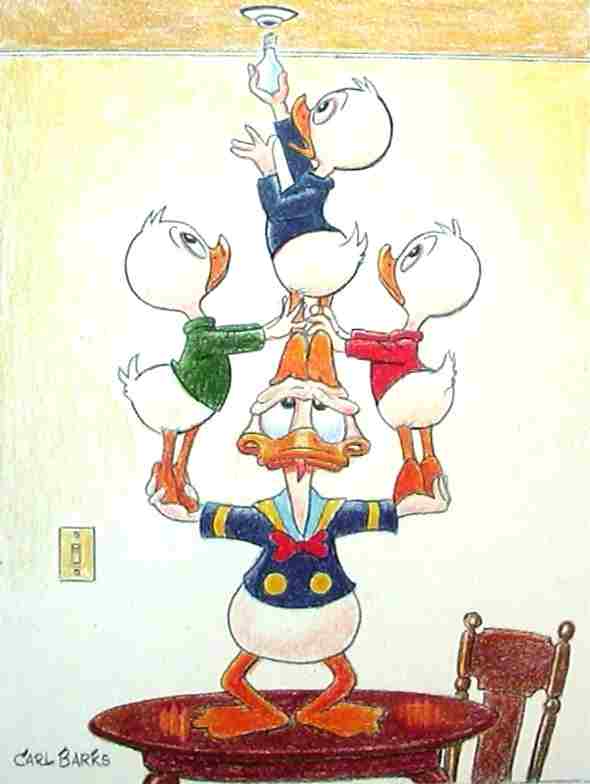 Family size Job |
|||
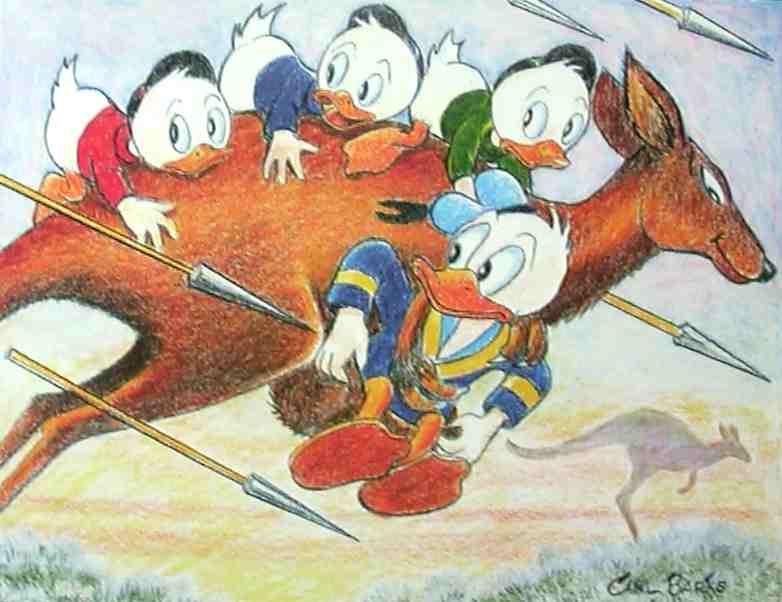 Outback Down Under |
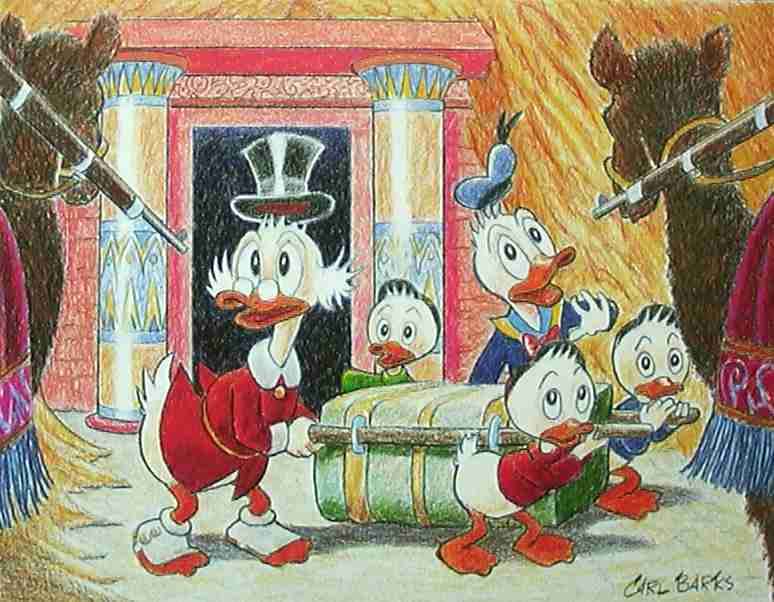 At King Solomon's Mines |
||||
| In 1996 and 1997 Barks produced a large number of crayons in which he carried over the used basic colours from his paintings. Again, we see Scrooge wearing his black top hat, the distinct red coat with the greyish lapel and cuffs, and matching spats. Donald is wearing his light blue cap and blue and yellow sailor's jacket, but there is a difference: His square back collar is now pale blue just as it was all those years ago when Barks worked with cartoons. | |||||
|
| http://www.cbarks.dk/THECOLOURS.htm | Date 2003-09-04 |