Carl Barks made many Disney duck comic book stories - and later paintings as well - in which he mentioned known persons and characters from mythology, legend, and real life (this website contains several pages covering these topics). Some of them were merely mentioned 'in passing' in the stories, while other stories bore titles with direct reference to a certain person or character. This page presents you to the latter type of stories including a brief description of the titles' eponymous origins.
NB.: The examples only
include persons or characters mentioned in Barks' own story titles, thus
excluding untitled stories later commonly referred to as WDCS110 'Goldilocks'
and
WDCS112 'Rip van Winkle', as well as stories bearing slightly corrected titles
such as
U$29 Hound of the Whiskervilles and WDCS283 Captain Blight's Mystery Ship.
|
CP01 A Letter to Santa |
|||||
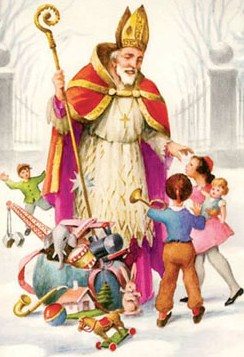
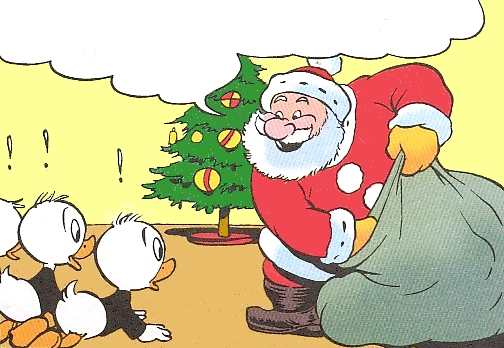
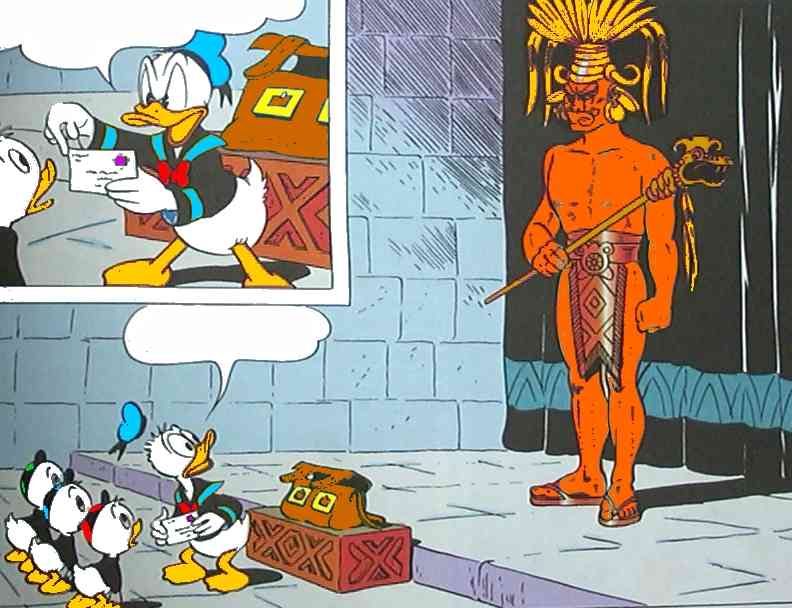
The Christian bishop Saint Nicholas of Myra from the 4th century's Turkey is the primary inspiration for the Santa Claus figure, but today's character is traditionally supposed to have arisen from a Coca-Cola advertisement campaign in the 1930s. ● Not only Santa Claus himself is present in the story, but Donald Duck and Uncle Scrooge dress up to impersonate the character as well. Barks also used the jolly man as part of the title in FG1946 Santa's Stormy Visit. |
|
U$14 Lost Crown of Genghis Khan |
|||||
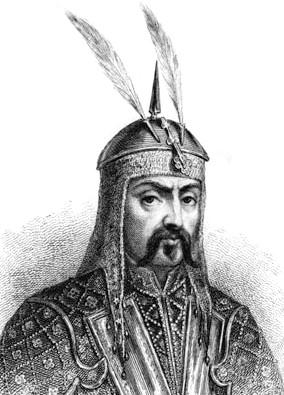
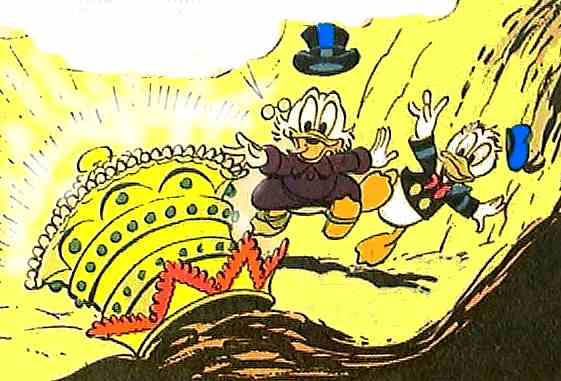
Genghis Khan (ca.1162-1227), born with the name Temüjin, became the founder of the Mongol Empire, that grew to be the largest empire in the world. ● The story takes place in the Himalayan mountain range, in which Scrooge hopes to track down a historical golden crown that once belonged to the Khan. NB.: History has no description of him ever having worn a crown... |
|
FC0422 The Gilded Man |
|||||
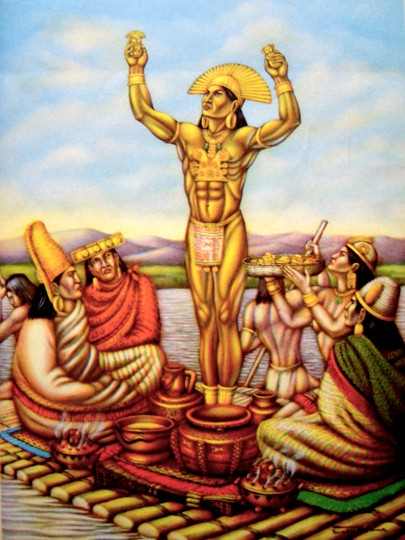
El Dorado is the legendary figure of a gilded man who was said to be the leader of the Chibchá Indians in Guyana, an enormous area which originally covered all of the northeast South America from coast to coast. ● Barks placed his ducks in British Guiana to enable them to meet the gilded man. However, Barks was mistaken when assuming that the figure was from what was then British Guiana (observe the difference in spelling). |
|
U$26 The Prize of Pizarro |
|||||
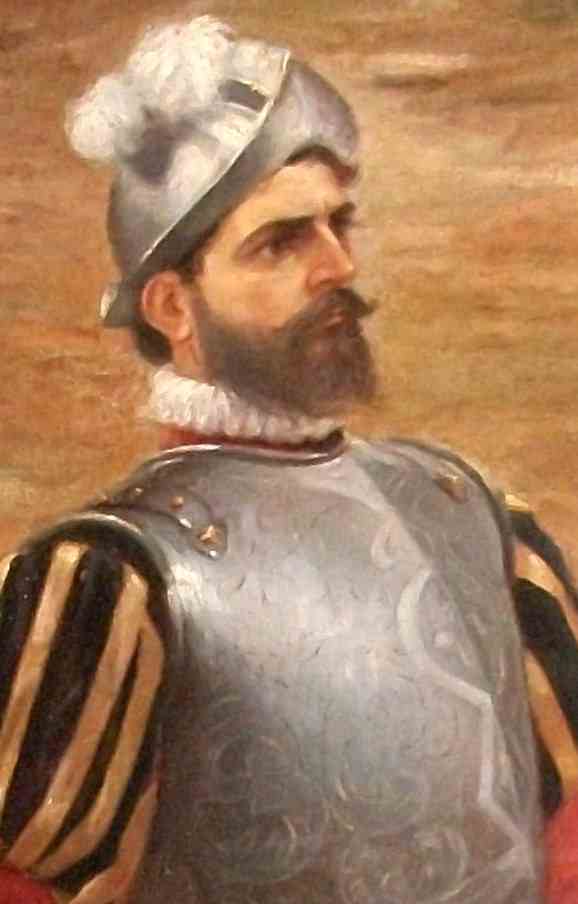
Francisco Pizarro (1475-1541) was a Spanish conquistador who explored parts of Central and South America along the Pacific coastline. He later went on to conquer the vast Inca Empire in South America. ● There are several references to Pizarro in the story. Example: Scrooge says about a Spanish galleon that he bought: Pizarro's men shipped home chests of Inca gold in its hold! |
|
U$25 The Flying Dutchman |
|||||
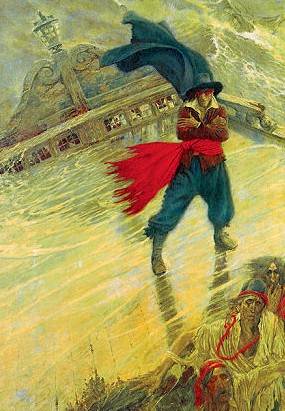
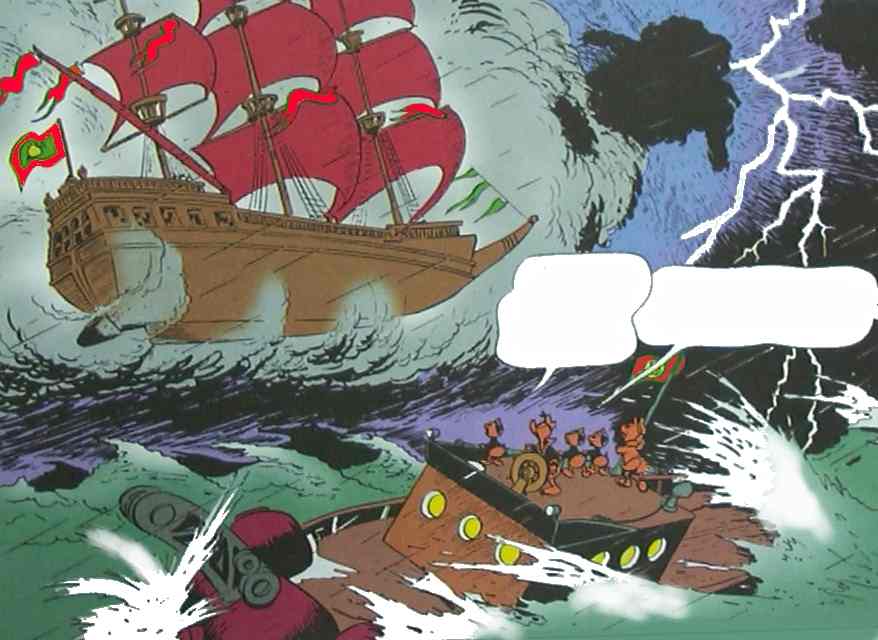
Old tales have it that the Dutch sea captain Hendrick van der Decken during a storm at the Cape of Good Hope south of Africa made a blasphemous remark upon which he and his ship were doomed to sail the high seas forever. NB.: Both the captain and his ship are normally referred to as The Flying Dutchman. ● Through time more than a hundred authors, composers, painting artists, and poets have rendered their version of the tale and Barks gladly joined the party. |
|
U$37 Cave of Ali Baba |
|||||
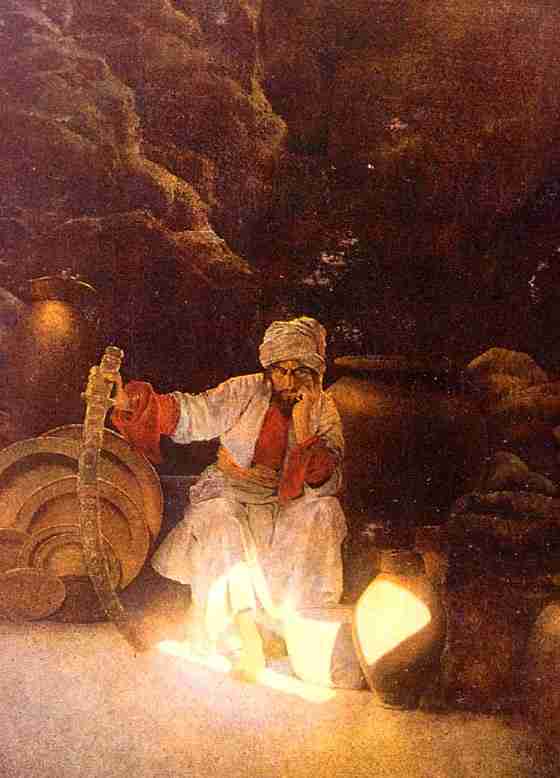
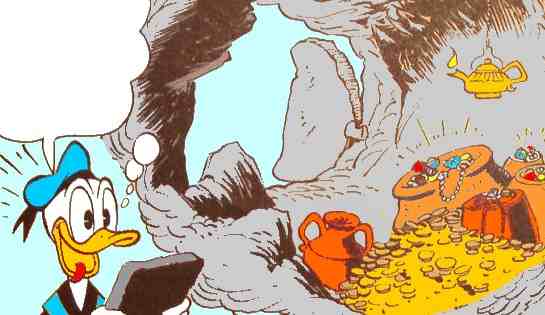
Ali Baba was a legendary robber from the story Ali Baba and the 40 Thieves which appears in the famous Arabian folklore collection 1,001 Arabian Nights Tales. ● Barks included several elements from the ancient 1,001 Arabian Nights such as Jinns, whirling dervishes, and Rocs, and a direct reference to the Ali Baba chapter was the use of the exclamation Open Sesame, that opened the cliff door to a hidden treasure cave. |
|
U$64 Treasure of Marco Polo |
|||||
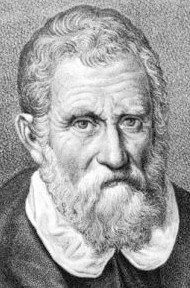
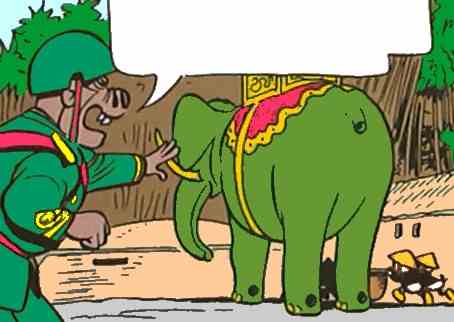
Marco Polo (1254-1324) was an Italian explorer who was the first European to travel vast areas of East Asia. He brought back a large number of materials and inventions unknown to the Western world. ● Scrooge is visiting the harbour to receive a certain cargo: This jade elephant is reputed to have been part of a shipload of treasure Marco Polo was taking from Ancient Cathay to Persia! The story has several other references to the explorer. |
|
U$19 The Mines of King Solomon |
|||||
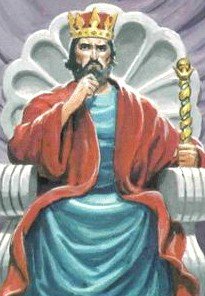
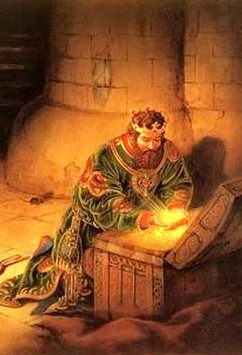
Solomon (ca.1035 BC-925 BC) was the third King of Israel, builder of the famed temple in Jerusalem, renowned for his great wisdom and wealth. Persistent stories continue to this day to circle around his mines, which are supposed to contain vast treasures. ● In the story the nephews translate ancient writings on a cliff surface: I, Pinjab, Captain of King Solomon's caravans, passed this way with forty camels laden with gold and jewels! As can be expected (from the title) the story has several other references to Solomon. |
|
U$28 'The Paul Bunyan' Machine |
|||||
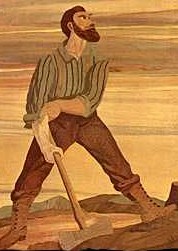
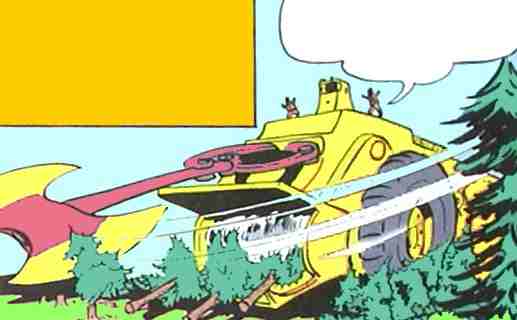
Paul Bunyan, who supposedly was a giant axe-wielding lumberjack, whose 'legend' was created in logging camps by lumberjacks who gathered around the wood stoves on cold winter evenings. ● Barks used the basic fable idea to make two enormous chopping machines, that could axe great numbers of trees. |
|
U$36 The Midas Touch |
|||||
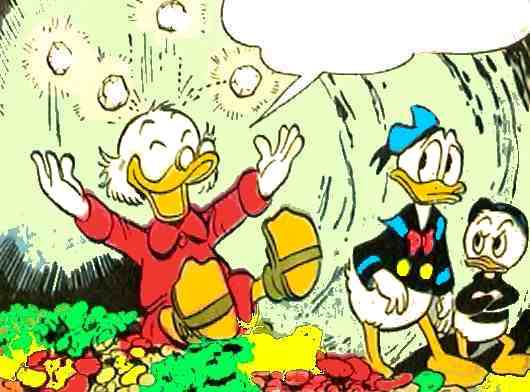
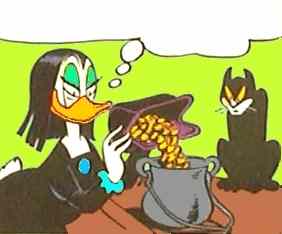
In mythology Midas was the Grecian King of Phrygia, nowadays a part of Turkey, who once wished that everything he touched would turn into gold. His thoughtless wish was granted by the Gods, but it soon came back to haunt him. ● In the story Magica de Spell has the ability to make anything change that she targets with her magic wand. Incidentally, Midas was mentioned in no less than 7 of Barks' stories. |
|
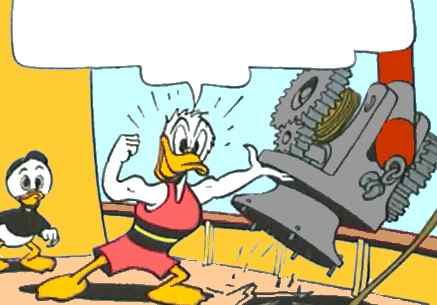
WDCS292 Instant Hercules |
|||||
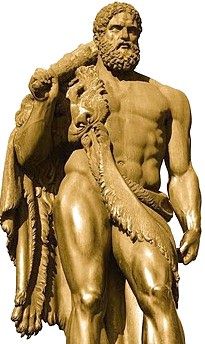
The son of the Greek god Zeus, Hercules (more correctly Heracles!), was the greatest hero and later on god in the Greek and Roman myths. He is most notable for his peak physical condition. ● Barks rendered Donald with immense physical powers. In U$34 Mythtic Mystery Barks gave us his version of a very old Hercules without much muscletone left... |
|
http://www.cbarks.dk/THEEPONYMOUSTITLES.htm |
Date 2016-10-27 |